
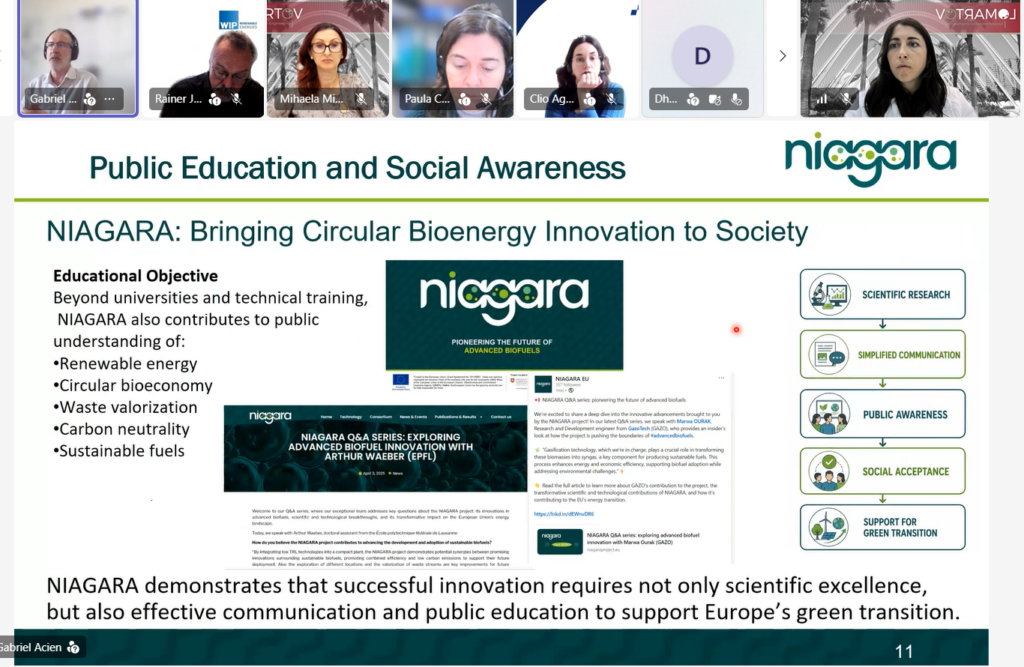
On 12 May 2026, the NIAGARA project hosted the webinar “Teaching the Energy Transition – Bringing Circular Bio-Based Energy Innovations from EU Projects into the Classroom”, bringing together researchers, educators, and representatives from Horizon Europe projects to discuss how innovative bio-based energy research can be transformed into practical educational content.
Moderated by LOMARTOV SL., the webinar explored the important role of education in improving public understanding and social acceptance of emerging energy technologies. The session was framed around NIAGARA’s commitment to Responsible Research and Innovation (RRI), highlighting that the success of the energy transition depends not only on technological innovation, but also on informed and engaged societies.
The webinar featured presentations from three EU-funded projects — NIAGARA, ICARUS, and FUELGAE — each showcasing how research outputs can be translated into curriculum-ready learning materials and real-world case studies.
Project Highlights
NIAGARA demonstrated how its integrated circular bioenergy system — combining microalgae, biogenic waste valorisation, CO₂ capture, and electricity generation through fuel cells — can support teaching across chemical engineering, biotechnology, agriculture, thermochemical conversion, and digital engineering.
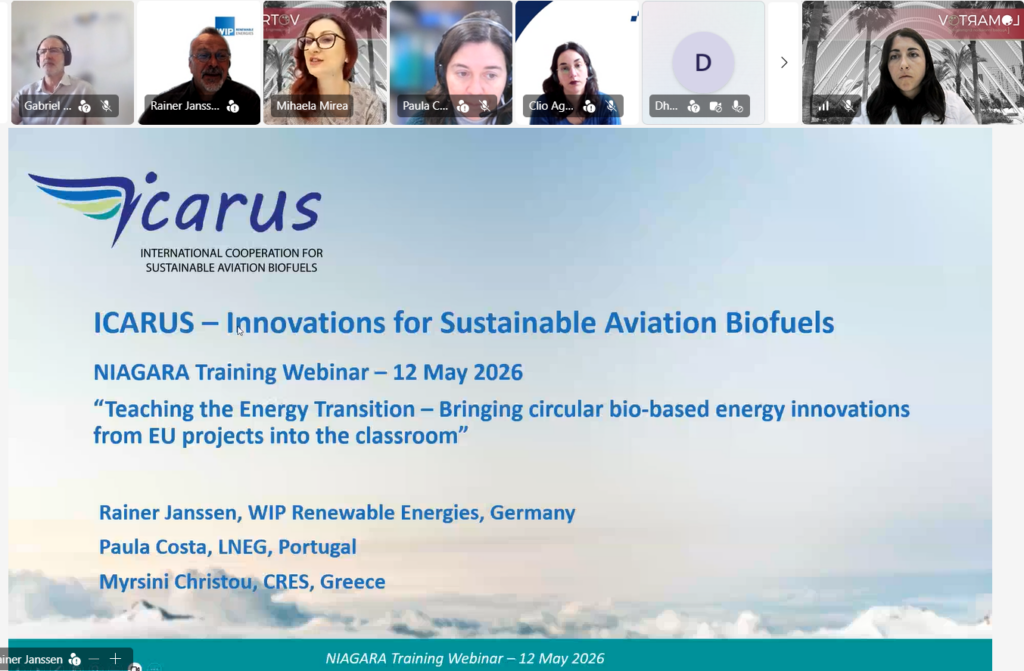
ICARUS presented innovative pathways for Sustainable Aviation Fuel (SAF) production, including hydrothermal liquefaction, advanced fermentation, and syngas conversion technologies. The project highlighted how real research data can help students better understand decarbonisation, energy security, and sustainable fuel development.
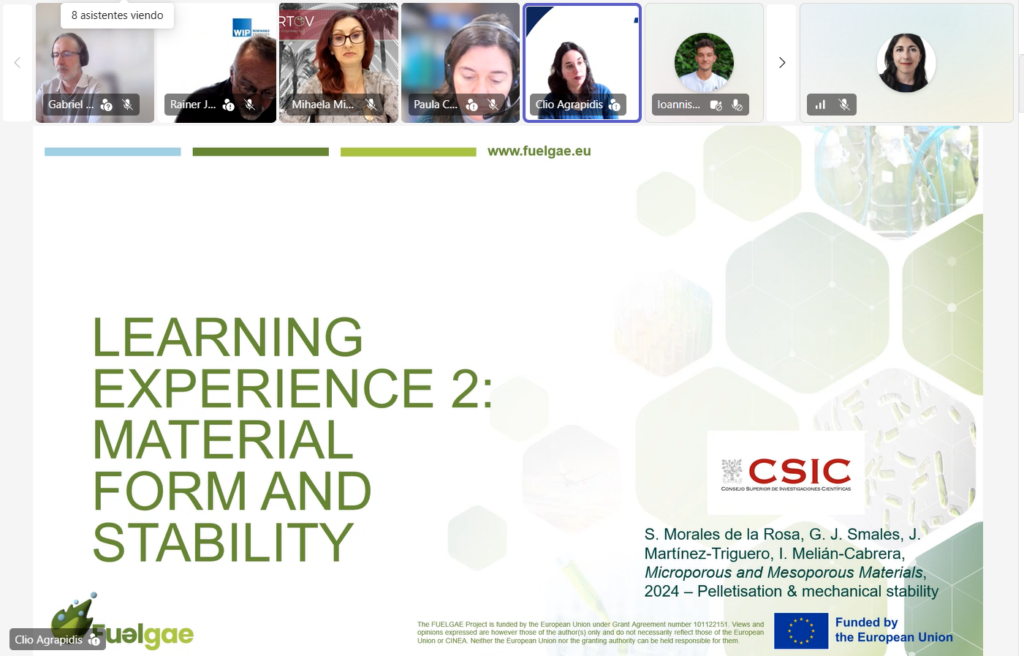
FUELGAE showcased educational modules based on industrial CO₂ capture, microalgae cultivation, catalyst stability, and renewable fuel production, demonstrating how authentic industrial challenges can strengthen interdisciplinary learning.
The webinar concluded with a roundtable discussion focused on how EU research projects can better support formal education. Speakers emphasised the importance of:
- using real-world case studies and pilot-scale research results in teaching;
- providing hands-on learning opportunities and laboratory experience;
- developing accessible educational materials adapted to different audiences;
- using videos and multimedia resources to make research more visible and understandable;
- promoting open knowledge sharing while balancing intellectual property considerations.
A key conclusion emerging from the discussions was that the bridge between research and education is not automatic. Translating scientific outputs into engaging learning resources requires dedicated effort, collaboration with educators, and communication approaches that make complex technologies accessible without oversimplifying them.
Speakers also stressed that interdisciplinary learning is essential for preparing future professionals for the realities of modern energy systems, where biology, chemistry, engineering, sustainability, and digital technologies increasingly intersect.
The webinar reinforced the idea that social acceptance is closely linked to education and awareness. Building the future energy system means not only developing innovative technologies, but also building the skills, knowledge, and societal understanding needed to support their long-term uptake.
The webinar recording is available for those who could not attend the live session or wish to revisit the discussions and presentations.